Sunday, June 1, 2014

Goodnight Moon

Celebrate the Strawberry Moon on June 13

Goodnight Moon
Living in Nature’s Rhythm

A neighbor and fellow gardener suggested I plant my summer vegetable garden in synch with the moon.  Huh?  I had never contemplated such an idea, but as I digested the information, it made sense.  Fishermen follow tides schedules to catch the largest bounty.  Farmers, too, use the moon to measure the amount of moisture in the ground.

The moon’s gravitational pull on the Earth controls not only high and low tides, but also how dry and moist the ground is.  As a full moon approaches, the ground is thought to be especially moist and is great for planting crops that grow belowthe Earth’s surface such as potatoes and pumpkins.  The new moon marks the perfect time to plant tomatoes, cucumbers and other plants that bloom above the ground.

In addition, many Indian tribes, especially the Algonquians, gave full moons names to keep track of the seasons.  Reoccurring full moons like June’s StrawberryMoon signifies the best time to harvest summer’s juiciest berries.  The Strawberry Moon is also known as the Rose Moon in Europe where strawberries are not native.  Other cultures refer to June’s moon as the Hot Moon in reference to the start of summer.


Whether or not you’re a gardener, plan a special evening outdoors on June 13 when the Strawberry Moon appears.  Pick up a pint of fresh strawberries, and add them to your beverages, salads and desserts.  Cheers to summer, and cheers to Mother Nature!

Thursday, May 1, 2014

Ditch Your Chair


Ditch Your Chair

We sit while we drive to work.  We sit at our desks.  We sit during three boring meetings.  We sit at our desk or in our car to eat lunch.  We come home and guess what?  We sit some more.

We spent a lot of time sitting, and all of this sitting is taking a toll on our health.  Sitting, while it is relaxing, shortens the hip flexors (those muscles that run along the front of your legs and attach to the spine).  Tight hip flexors inhibit the torso from lifting up and causing us to overarch the lower back.  The result: weak, tight hips and back muscles that cause pain, discomfort, poor posture and other illnesses in the body.

Being in pain adds not only stress to our jobs, but also costs us more moolah.  Back pain costs Americans around $15 billion per year in medical care and disability payments.  Recent studies show that 75% of healthcare spending is for preventable illnesses (keyword PREVENTABLE).  Alarmingly, medical reimbursements for low-back pain in the U.S. alone, is $34 billion annually! (BMC Complementary and Alternative Medicine, June 2012)

Taking the first step to reclaim your health is hard.  You have to want to do it for you.  It can’t be forced or it will never become part of your daily life.  So, are you with me?  Are you ready to change? 

We begin with getting out of your chair during the day.  Park at the back of the parking lot, ride a bike to work (not the Harley kind) or climb the stairs to a different bathroom.  Walk outside during lunch or when you get home in the evening.  Your new keyword is MOVE.  Do whatever you can to move throughout the day even if that means dancing in your cube.

In addition, yoga can help undo what corporate America has done to our bodies.  Simple stretches like lunges and twists can bring relief to back sufferers.  In fact, just 15 minutes of mindful breathing and stretching has been proven to dramatically reduce both respiratory rate and blood pressure - two more contributors to chronic health. (BMC Complementary and Alternative Medicine, June 2012)

Here are a few resources I’ve collected to help start you on your new journey.  Download and print any of Limber Llama’s flowing yoga sequences including the “Ditch Your Chair” sequence to keep at your desk.  View videos and read tips from Yoga Journal’s “Office Yoga” workshop or iTunes app Office Yoga.  Awaken body awareness with Yoga International’s article on finding your psoas (a key muscle in opening the hip flexors.) 

Tuesday, April 1, 2014

Turn Up the Heat


Turn Up the Heat
Shed Winter’s Blues

After a long, bitter winter, the first few days of spring can feel like summertime.  Chilly mornings lead to warm and comfortable afternoons.  Daffodils begin to stretch their stems after their long winter’s nap.  Birds sing and whistle while rabbits start hopping across yards.  Spring has arrived.

As the season changes, so should our yoga practice.  Following an Ayurvedic approach, spring represents the heaviness of rain and the rebirth of the earth.  Our practice should help shed off the heaviness with more movement and lightness.

Now is the time of the year where it is appropriate to turn up the heat and intensity of your practice.  Feel free to incorporate more standing, twisting and balance postures.

Standing poses like Warrior I and Cresent ground and strengthen our stems. Standing and seated twists such as twisted lunge help squeeze out the excess weight, emotions and tension built up from the long winter.  Balance postures like crow and handstand challenge our mind and support our core.

Try this special Detox Flow Yoga Class with my teacher, Maria Garre.  While I’m not there to assist you, here are my words of advice.  Move at your own pace, and modify based on your personal needs.


Start moving this month, and feel the full release of winter.

Friday, February 28, 2014

Shine On

Limber Llama Yoga teacher, Jennifer Weiss teaching at Girls Inc. of Washington County.

Shine On
Confidence Sparkles

What would my childhood have been like if I had been exposed to yoga at age 10?  This very question is what led me to begin volunteering with pre-teens and teenagers in Hagerstown.

When I pose this question to my adult students, they sigh, and say life would have been so much easier.  “I would have more confidence in my body.”  “I could have taken more time to react to situations.” “I may have been a more authentic me.”  And the list goes on and on.

All the benefits adults enjoy as a regular yoga practice, teens can experience too.  From the ability to act consciously instead of reacting to a situation to redirecting negative thoughts into positive ones, yoga is a toolbox of movement, breath and mind practices.  This toolbox aids in building self-confidence, gaining greater depth of enjoyment of life, and giving courage to be the real you.

It may not seem like all of these benefits are possible, but let’s break it down.  When a student begins practicing yoga poses (asanas), she first has to let go of what’s happening outside her mat in order to do the pose correctly.  Once she gains some confidence in her Downward Facing Dog, she’ll start to connect her breath to each movement.   Then, she stops the movement, but continues to focus on the breath while calming the mind.

The student then begins to practice self-awareness (paying attention) off the mat.  She takes a breath before speaking.  She understands and communicates the feelings she’s experiencing.  She takes more time to make smart decisions.  She gains more confidence in herself as well as her support system.

Who wouldn’t want these benefits?  And who wouldn’t want to give them to their son or daughter?  During the month of March 2014, teens (ages 10-18) can practice for free when accompanied by a paying adult to any Limber Llama Yoga class.


Sunday, February 2, 2014

Heart of the Matter


Heart of the Matter
Getting Emotional

Since receiving Shiva Rea’s new book, Tending the Heart Fire, I’ve been intrigued with how little I know about our hearts.   For instance, you probably already knew heart disease is the #1 killer among men and women.  It causes one in four deaths every year per the CDC.  Yes, poor diet and physical inactivity contribute to these high statistics.

But have you ever considered that our heart is more than just a pump? Our heart is a workhorse pumping thousands of gallons of blood throughout our body every hour.  It is connected via the circulatory system to every part of our body.  “Within one minute, the heart can circulate one breath throughout the body.”

In addition, the heart communicates to every cell in our body through its electrical field. (Yes, I realize this is a bit more scientific than most of my posts, but stay with me on this.)  It communicates feelings, thoughts, and emotions along with nutrients to each and every crevice within the body.

When presented with new information, where do you feel you process this information? In the heart or in the mind?  For example, you have been offered a promotion at work.  Your initial feelings are of joy and excitement actually felt within the heart then translated by the mind.  Thus, we process new information in the heart first.

So, if we process the information in the heart first, and the heart can communicate to every cell in our body within a minute, think about how quickly what you think and feel can disrupt about a situation will affect your entire body.  Within one minute, you can feel happiness or sadness.  Add to this the stressful lives we lead of all work and no play.  This stress on the body contributes to the overall number of heart disease claims.

We can help our heart stay healthy and fit by tuning into it.  With realization that our emotions affect our wellbeing, we can begin with each breath.  Slow down, and try to stay calm when processing information avoiding the fight or flight scenario to every instance.  Notice what situations get your blood pumping (in a bad way), and find ways to prevent them in the future – preparing more, leaving earlier, redefining job responsibilities, enjoying life more.

“Back into the chamber turning, all my soul within me burning,
Soon again I heard a tapping somewhat louder than before…”
“The Raven” by Edgar Allan Poe

It is your heart calling, calling once more.

Thursday, January 2, 2014

Savor in the New Year

 Limber Llama Yoga

Savor in the New Year
Every Moment Counts

Pick up any yoga book or self-help book for that matter, and you’ll read the following advice:  Be in the present moment.  Enjoy right now.  Great advice, but how do we get “good” at living in the moment?

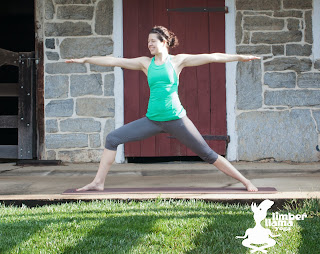
Just as a basketball player practices free throws for game time, we can practice being present in our asana (poses) practice.  When you step into Warrior 2, you first begin to line up the feet, then legs.  You elongate your spine, and spread your energy out from your heart to your fingertips.  But the pose doesn’t stop here.  Prana (energy) continues to flow.

Here’s where the magic begins.  You begin to notice.  You begin to listen.  Your breath, whether slow and steady or short and fast, is sending messages to your mind.  If you choose to listen, you begin to adjust your stance or lift your heart. 

Your mind slowly lets go of outside distractions and focuses on what is happening right now – standing in Warrior 2.  Each time we enter Warrior 2, our bodies give other messages such as “when I lift my chest, I can breathe easier,” and “dipping a little deeper into my hips releases the work stress from the day.”

When we step off the mat, and back into the real world, we put this mindful practice into action.  Savor the drive to and from work – giving yourself time to sit in quietness.  Let your mind soak in the scrubbing motion when washing dishes.  Turn off all electronics and spend time listening to your family without any distractions.  Indulge in a delicious piece of chocolate cake tasting every moist detail.


Slow down and enjoy the ride.  Spend the time practicing on the mat, and savor the results everyday.