Showing posts with label beginners yoga. Show all posts

Tuesday, June 2, 2015

Bon Voyage

Jennifer Weiss, Limber Llama Yoga, demonstrates Locust Pose, a great chest opener after a day of travel.

Bon Voyage
Yoga-to-Go

June kicks off the summer travel season for most including me.  I start planning for any vacation with a to-do list.  What needs to go, what needs to be washed, what errands still need to be run.  I thrive on these lists and all the pre-planning.  Though, once we step out the door, I have to let go of control.

Airline postponements, road construction and weather delays are all out of our control.  But they have such an effect on our emotional state.  Sitting on the tarmac for more than 30 minutes gets anyone’s blood pumping.  Oh, and what if you are traveling with little ones?  They are less patient than adults.  Here are a few tips to help you survive this travel season.

Travel Tips
  1. Stay hydrated.  Dehydration causes all sorts of misery like headaches, crankiness, constipation and anxiety.  Carry a reusable water bottle.  If traveling by air, leave out the water, but pack lemon slices in the bottle.  Once you’re past security, add water and enjoy.
  2. Eat well.  You are at the mercy of flight schedules and traffic delays.  Don’t allow yourself to get hungry.  Pack foods that are easy to store like nuts, granola, apples, oranges and bananas.  When you are able to eat, choose foods that agree with you.  (i.e. If Mexican dishes give you heartburn, expect heartburn plus more indigestion while traveling.)
  3. Bring entertainment.  Normally, I’d suggest meditating during delays, but it’s not always possible or easy.  Pack a book or magazine (or download to your device) to challenge and distract your mind during those tough times.
  4. Pack a scarf, wrap, jacket or sweater.  Temperature can also affect our mood.  It’s best to dress in layers so you can control how cool or warm you need to be.
  5. Silence is golden.  Turning off our senses helps calm the mind.  Pack ear plugs, close your eyes and breathe.
  6. Above all, patience is important.  Life it too short to sweat the small stuff.  So you missed your flight.  There will be another.  Cultivate the love and patience you practice on the mat, and demonstrate it now.
Yoga-to-Go
Certain yoga poses can alleviate body aches, mental frustration and indigestion.  You can print or view my Destination Yoga sequence or try some of the below poses.  And if you don’t have room for a yoga mat, purchase a pair of Yoga Paws and use a towel at the hotel
  1. Downward Facing Dog:  This pose opens up the entire backside of your body releasing tension from the travel.
  2. Low Lunge:  Sitting wreaks havoc on our hips.  And tight hips equal a tight and sore back.
  3.  Child’s Pose: Feel grounded with your forehead touching the earth.  This pose also alleviates digestion issues by opening up the lower back.
  4. Happy Baby:  Allow your worries to sink into the ground with this pose.  Release low back pain and open the hips while improving digestion.
  5. Locust Pose:  Rounded shoulders and a weak low back are the effects of sitting too much.  Practice locust to open the chest and shoulders while strengthening the back.  

     Happy Travels!


Sunday, May 3, 2015

Growth Comes with Change

 Thank you

Growth Comes with Change
Seeing where the Road Takes You

This May I celebrate four wonderful years of teaching yoga in Hagerstown.  In these years, I’ve taught at a party store, a basement, a sunroom, a gym, a park, a conference room, a high school, a lounge, and a historical loft in downtown Hagerstown.  I’ve met hundreds of people – beginners, intermediates, advanced, healthy, injured, young and old.  And the funny thing is, I still considered myself a new teacher.

I recall my very first class as I nervously stood on my mat and held tightly to my sequence.  I spoke quickly, moved quickly and barely left the safety of my mat.  I also decided to begin teaching mirroring my students while pregnant (not recommended).  After two kids and a whole lot of classes in between, my style evolved into something that reflects who I am today – more confident, flexible.

The most challenging decision I ever made as a yoga teacher was to offer all my classes in an all-levels format.  I may have a sequence prepared for class, but I had to be able to adapt to whoever walked through my door.  I had to quickly access my students’ energy levels as well as physical abilities within the first 10 minutes of class.  I took continuing education classes and read lots of books on how to modify and adapt yoga for each body.

While not every class is perfect, I continue to get better with this format. We should all be open to change, willing to see where the next path will take us.  We may not know what the road looks like or where it will take us, but with confidence, we’ll be able to look back at the changes we’ve made to arrive at our current destination.

Here are 3 tips to help embrace change:
  1. Cultivate patience.   We are going to make mistakes.  Take a few deep breaths when life gets frustrating.  Life responds between each of those breaths.
  2. Have faith.  We don’t always know exactly how a decision will play out.  Decide to be confident in your choice.  Instead of the constant doubting and worrying, become fully aware and experience joy with the outcome.
  3. Stick with it.  Changing habits typically take time (31 is the magic number I’ve read about).   Make a plan and stay with it for a period of time.  (i.e. When incorporating meditation in my daily lifestyle, I failed so many times to stay consistent.  I finally found the right formula for me – 5 minutes a day, anytime during the day.  This was four years ago, and now I almost feel like I’ve forgotten to brush my teeth when I don’t meditate.)


Thank you for the last four years.  It has been a pleasure sharing what I’ve learned about yoga with you.  I’ll always consider myself a student learning from you.

Wednesday, April 1, 2015

Keeping Allergies at Bay


Keeping Allergies at Bay
Breath Awareness

Budding dogwoods and weeping cherry trees burst open in April.  Hagerstown becomes a pastel canvas of pinks, whites and lavenders.  Along with these beautiful colors come pollen and spring allergies.  Utilizing yoga’s breathing techniques can ease sneezing and watery eyes this year.

Our breath, whether it is slow or fast, shapes the pattern of energy flowing within our body.  If energy is stuck or lacking in an area of our body, disease results.  For example, a last minute work request gets our blood pumping and breath racing.  We barely notice the breath, but feel the results in tight, slouchy shoulders, a collapsed chest, sore backs and hips, achy knees and ankles.  Without noticing the breath, we weaken our immune system, and open ourselves to colds and runny noses.  Sound familiar?

“Controlling the breath is a prerequisite to controlling the mind and the body,” states Swami Rama.  In gaining control of our breath, we take control of our health.

Step 1:  Become aware of your breath.  Breathing is a both a voluntary and involuntary physiological process (meaning you can control your breath or allow it to work by itself.) Are you holding your breath on the drive home?  Is it moving quickly as you usher your kids out the door to school? You can let your breath run wild or harness its power to create more energy within the body.  Building awareness takes time.  Every time you notice your breath, give yourself a high five.

Step 2: Practice diaphragmatic breathing.  Inhale, draw the breath into the nostrils and press the belly out.  Exhale, drawing the belly in pushing the breath out through the nose.  This is the most efficient type of breathing.  Chest breathing (breathing into the middle and upper chest) is the most common, but you actually have to work harder to achieve the same blood/gas mixture exchange than diaphragmatic thus resulting in more breaths.  Diaphragmatic breathing also presses the lungs against the abdominals gently massaging and improving circulation and digestion.  Anxiety is associated with chest breathing.
When we neglect to notice our bodies, minds or breath in stressful moments, our breath which runs all by itself will kick into a “fight or flight” response and the energy in the body will follow course.

Step 3: Keep the nasal passage clean.  Nasal mucus is normal and beneficial.  It lubricates the passages, warms the breath and keeps viruses away.  However, if we breathe through our mouth, we invite cooler air that the body has to warm up into the body and potentially allow harmful germs to enter.  A few ways to keep the nasal passage clean are nasal rinsing (neti pot), nasal oiling (if you already have more mucus, dry air will cake and crust the mucus in the nose causing discomfort and irritation), pranayama (breathing exercises) and keeping an eye on your diet refraining from too much dairy, refined and processed foods.

Pranayama (breathing) Practice:
Anuloma Viloma (forceful alternate nostril breathing). Practicing breathing just 5 minutes a day will change your entire outlook on your day.  You’ll immediately be more in tune with your body, feel more relaxed and focused, and overall improve your health.

Enjoy spring and all of its wonders by preparing the nose now.  Breathe freely!

Monday, June 30, 2014

Cool Breezes


Cool Breezes
Chilling with your Breath

Have you noticed that maybe you are a little more irritable during the summer? July’s heat can fuel frustration and aggravation.  When the body temperature rises, our tempers sometimes follow.

A committed yoga practice can help bring awareness when these internal temperatures start to rise, as well as providing much needed cool breezes to our souls.  Surprisingly for many novice yogis, this practice begins with controlling our breath or pranayama.  “If the breath is chaotic the mind, emotions and thoughts are chaotic.  When the breath is controlled, still and steady, so is the mind” (Rolf Gates)

Two cooling pranayama techniques to try are sitali and sitkari.  Sitali translate to soothing or cool in Sanskrit.  Think of these styles as your own air conditioning unit!  Practicing sitali (or sitkari) calms the fight or flight response.  It cools the mind, body and spirit as well as blood pressure.  It has a calming effect to the entire nervous system.


Check out Yoga International’s detailed instructions on how to practice both sitali and sitkari.  Simply practicing these breathing techniques for 2-5 minutes a day can make a difference.  Take a breath today for a calmer, gentler you.

Thursday, January 2, 2014

Savor in the New Year

 Limber Llama Yoga

Savor in the New Year
Every Moment Counts

Pick up any yoga book or self-help book for that matter, and you’ll read the following advice:  Be in the present moment.  Enjoy right now.  Great advice, but how do we get “good” at living in the moment?

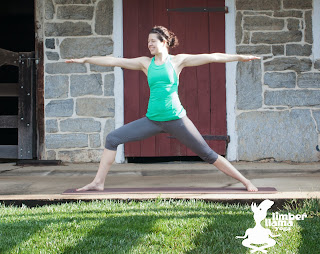
Just as a basketball player practices free throws for game time, we can practice being present in our asana (poses) practice.  When you step into Warrior 2, you first begin to line up the feet, then legs.  You elongate your spine, and spread your energy out from your heart to your fingertips.  But the pose doesn’t stop here.  Prana (energy) continues to flow.

Here’s where the magic begins.  You begin to notice.  You begin to listen.  Your breath, whether slow and steady or short and fast, is sending messages to your mind.  If you choose to listen, you begin to adjust your stance or lift your heart. 

Your mind slowly lets go of outside distractions and focuses on what is happening right now – standing in Warrior 2.  Each time we enter Warrior 2, our bodies give other messages such as “when I lift my chest, I can breathe easier,” and “dipping a little deeper into my hips releases the work stress from the day.”

When we step off the mat, and back into the real world, we put this mindful practice into action.  Savor the drive to and from work – giving yourself time to sit in quietness.  Let your mind soak in the scrubbing motion when washing dishes.  Turn off all electronics and spend time listening to your family without any distractions.  Indulge in a delicious piece of chocolate cake tasting every moist detail.


Slow down and enjoy the ride.  Spend the time practicing on the mat, and savor the results everyday.